I often take a camera when walking the dog, particularly in the Wye Valley or Forest of Dean. The wildlife in these two areas is as varied as the habitats. The Wye Valley offers steep sided gorges, woodland, gravel banks and water meadows. The Forest of Dean has woodland, heaths, ponds and streams. A walk in these areas offers many opportunities for seeing large mammals, birds of prey and a range of woodland birds. In summer there are many butterflies, dragonflies and damsel flies to be seen.
Wild Boar
The Forest of Dean is known for its wild boar population. A small number of boar escaped from a farm in the 1990s, and another group were illegally released neat Staunton in 2004. Boar are omnivorous, rugged and have litters of several piglets each year. The Forest is almost the perfect habitat for wild boar as it offers many isolated areas where they can rear their young, as well as abundant food in the woods and nearby settlements. Some boar managed to access farms and interbreed with domestic pigs. The population steadily increased until, in 2008, DEFRA and Forestry England recognized that the population needed to be limited to about 90.
Annual culls started in 2008. By 2012 it was realised that a population of around 400 was supportable, and also large enough to establish a reasonable gene pool. Before Covid I would expect to see boar on a weekly basis, but since then the culls have drive the boar deeper into the woods so encounters are much less common.
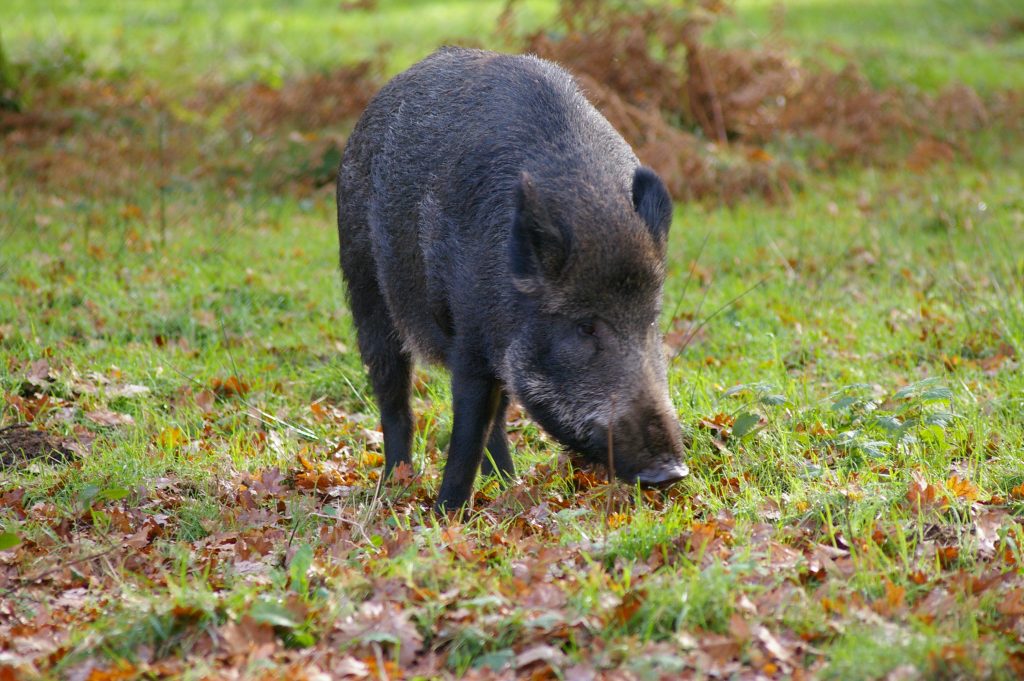
Boar are large (60kg-100kg) and try to avoid people. I took this picture of an adult male grazing in the open (using a zoom lens). He was quite unconcerned about my presence and continued to graze before trotting off into the woods. In general I’ve found solitary males are fairly relaxed about people provided you don’t get too close. They don’t like dogs so its best to keep dogs on a short lead.
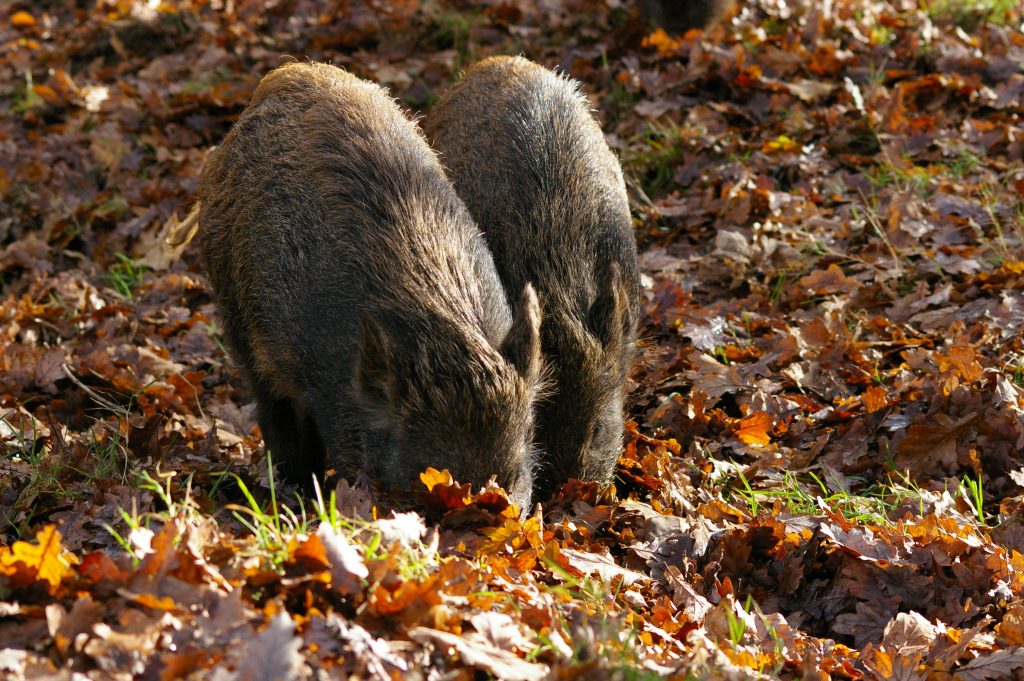
It’s best to avoid piglets, mainly because their very protective mum is never far away. This picture was taken from cover on an autumn morning, and shortly after I took it the sow guided her piglets away into cover. Between April and July the mature females often get together in groups of 2-4 adults with all their piglets. These groups, called ‘sounders’, are interesting to observe as one sow acts as a sentry, usually in a place where she can see and be seen. The remaining sows stay with the piglets and, if the sentry raises the alarm, the other sows guide the piglets away.
Deer
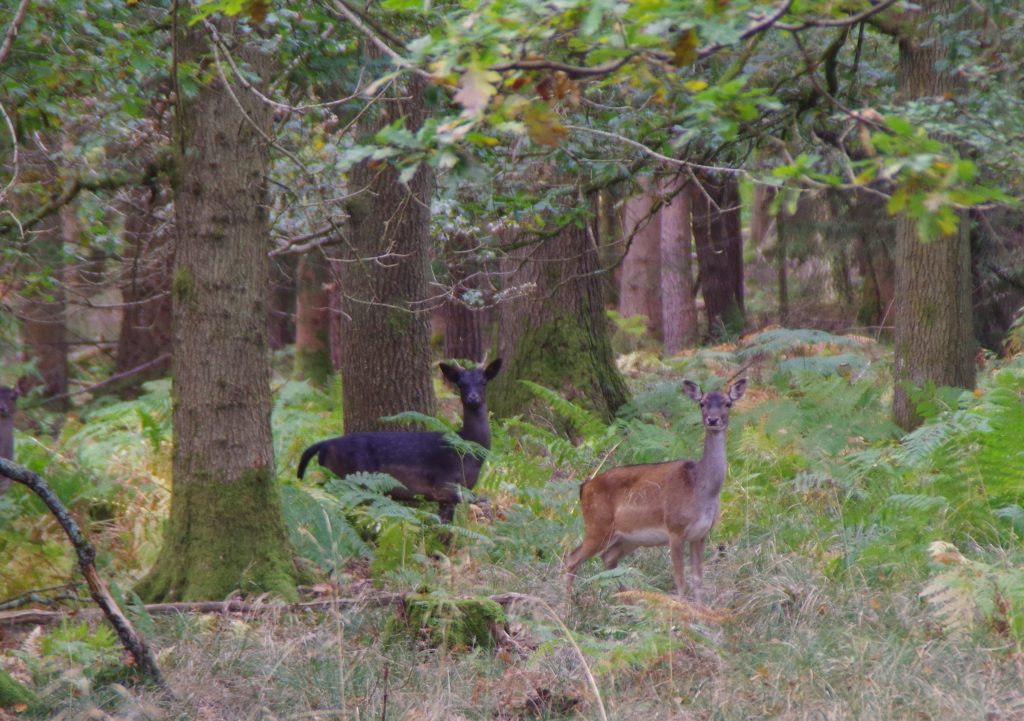
Deer can be seen all over the Forest of Dean and Wye Valley. In one area, north of the Sculpture Trail, there are some black deer. Generallycalled ‘melanistic’, this colour is uncommon among UK derr populations. I was lucky to get this picture of a stag and hind during one walk.